If the next space economy is shaped only by governments and a small circle of patient institutions, then the frontier may advance technically while remaining economically narrow. Missions can still fly, but the market around them will remain inaccessible, opaque and culturally distant.
The question is not only whether humanity reaches the frontier. The deeper question is who gets to understand it, finance it, build for it and participate in it while it is still forming.
Markets do not appear on the day extraction begins. They form earlier through data, models, operating systems, standards, simulations and trusted interfaces between uncertainty and capital.
The companies that matter first are often not the ones moving the first material. They are the ones that make a future sector legible before it becomes industrially mature.
There is no shortage of fascination around asteroid mining, lunar industry or deep-space logistics. What is missing are structured pathways that let investors, engineers, collectors and the wider public move from abstract fascination to concrete participation.
A frontier economy needs public interfaces, not only technical stacks. Participation creates distribution, legitimacy, capital formation and talent gravity. It turns a remote technical thesis into a living market with real stakeholders.
Before materials return, there is already value in intelligence, prospecting, autonomy, education, collector products and mission-linked data. These are not side businesses wrapped around the real story. They are the earliest market layer of the real story.
Orbitonomia starts where uncertainty is highest and economic interpretation is weakest: prospecting intelligence, mission framing, autonomy-adjacent systems, partner-enabled mission workflows and the interfaces that make frontier participation financially and culturally legible.
Frontiers become civilizational when they stop being the domain of a few insiders. More people need practical ways to study, support, build, collect and invest long before they can launch a mission of their own.
The next decade will define who owns the interface to the off-Earth economy. The companies that build understanding, trust, coordination and participation now will shape the market layer that later industrial missions depend on.
The collector watch is not merch. It is the first physical cultural object designed for people who want to enter the frontier before industrial missions become commonplace.
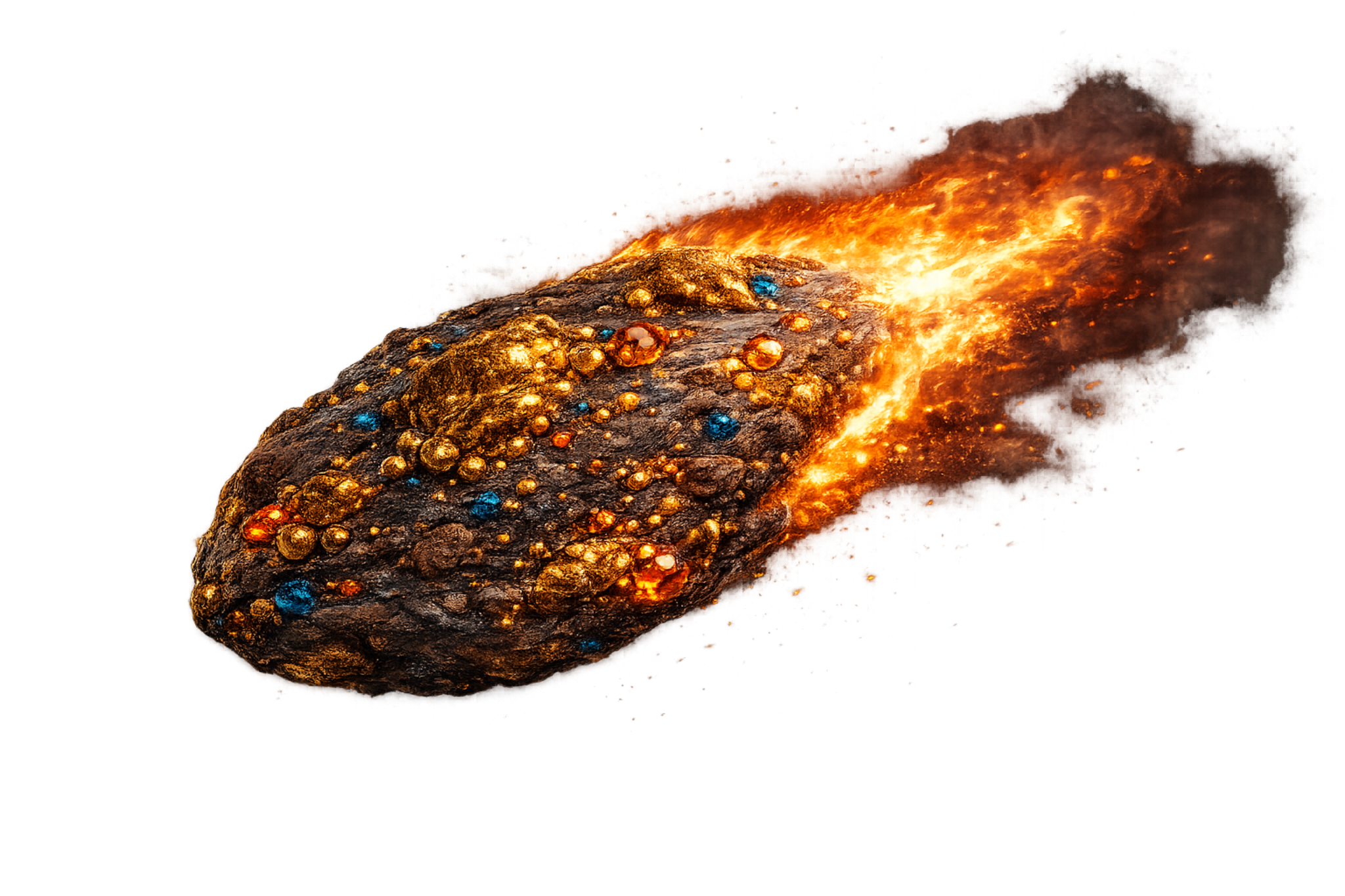
It combines a meteorite-based textured dial, an early collector release and access benefits tied to the expanding Orbitonomia ecosystem.